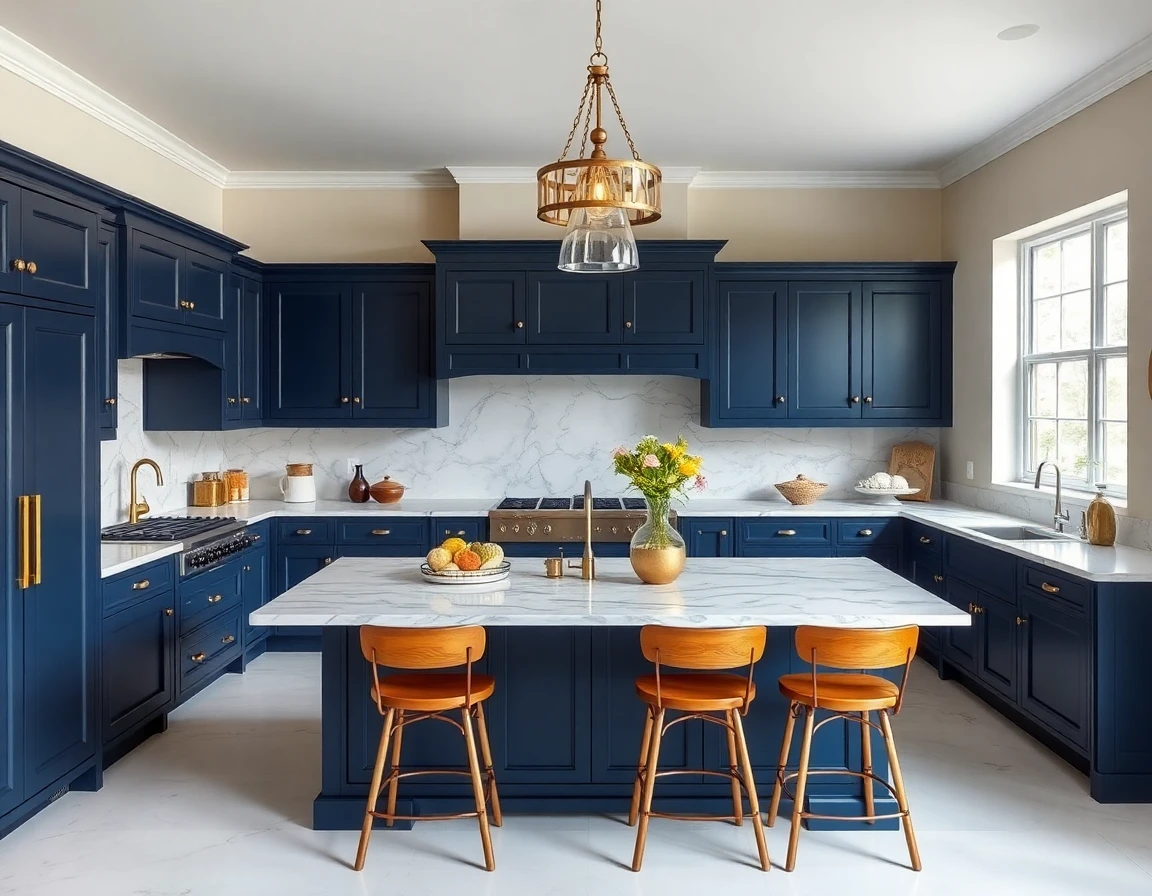
The Priory Kitchen.
A reinterpretation of the classic English shaker, built for a listed Georgian rectory in Burford. Deep navy hand-painted doors, reclaimed oak worktops, aged brass handles forged by a smith in Stroud, and a hand-glazed splashback in broken white.
The heart of the kitchen is an eight-foot central island, built around a six-oven Everhot. Every handle is different — a gentle in-joke between us and the family.
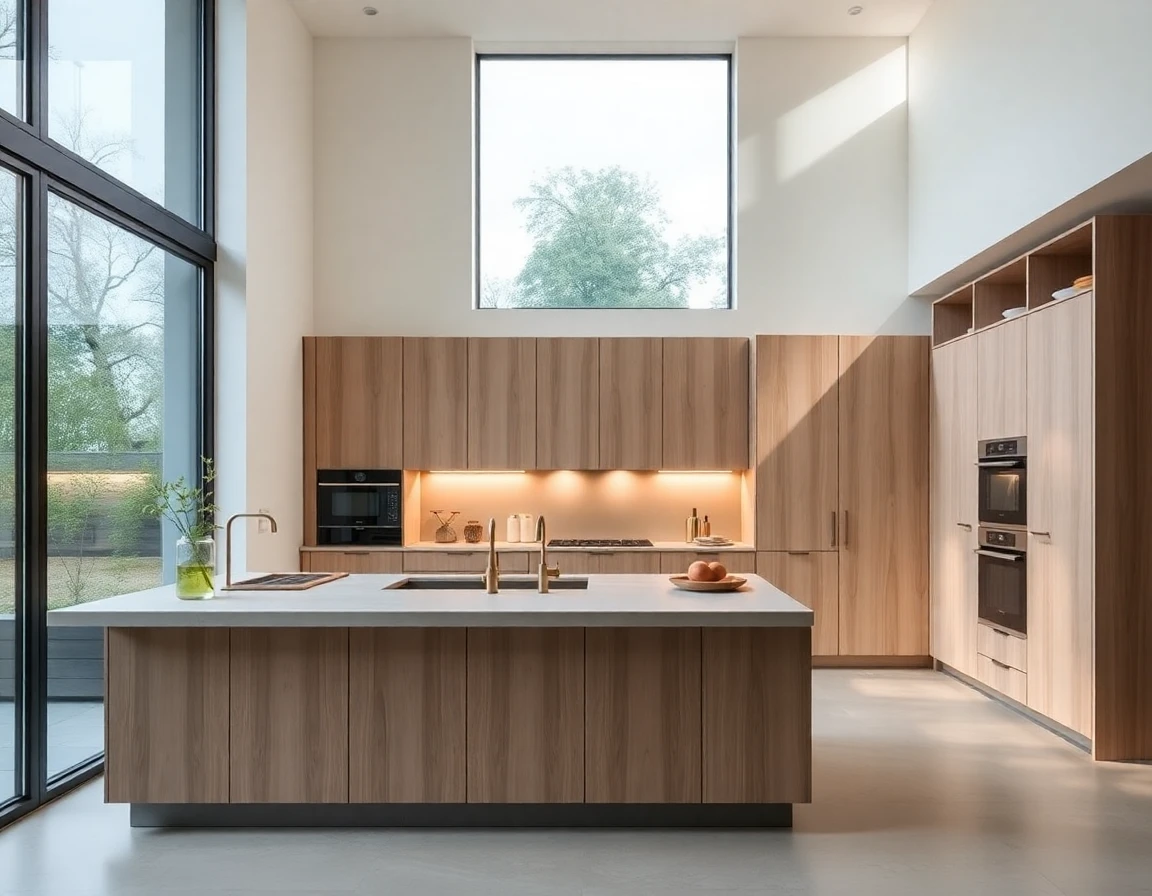
The North Orchard.
The brief was a single word: "disappear". A minimal, flat-fronted kitchen in rift-sawn oak, with integrated appliances, a concrete-textured composite worktop, and push-latch doors. No handles, no clutter, no visible storage.
The island — if you can call it that — is a single piece of honed limestone, poured over a walnut framework that looks like a piece of studio furniture. It took our workshop nine weeks alone.
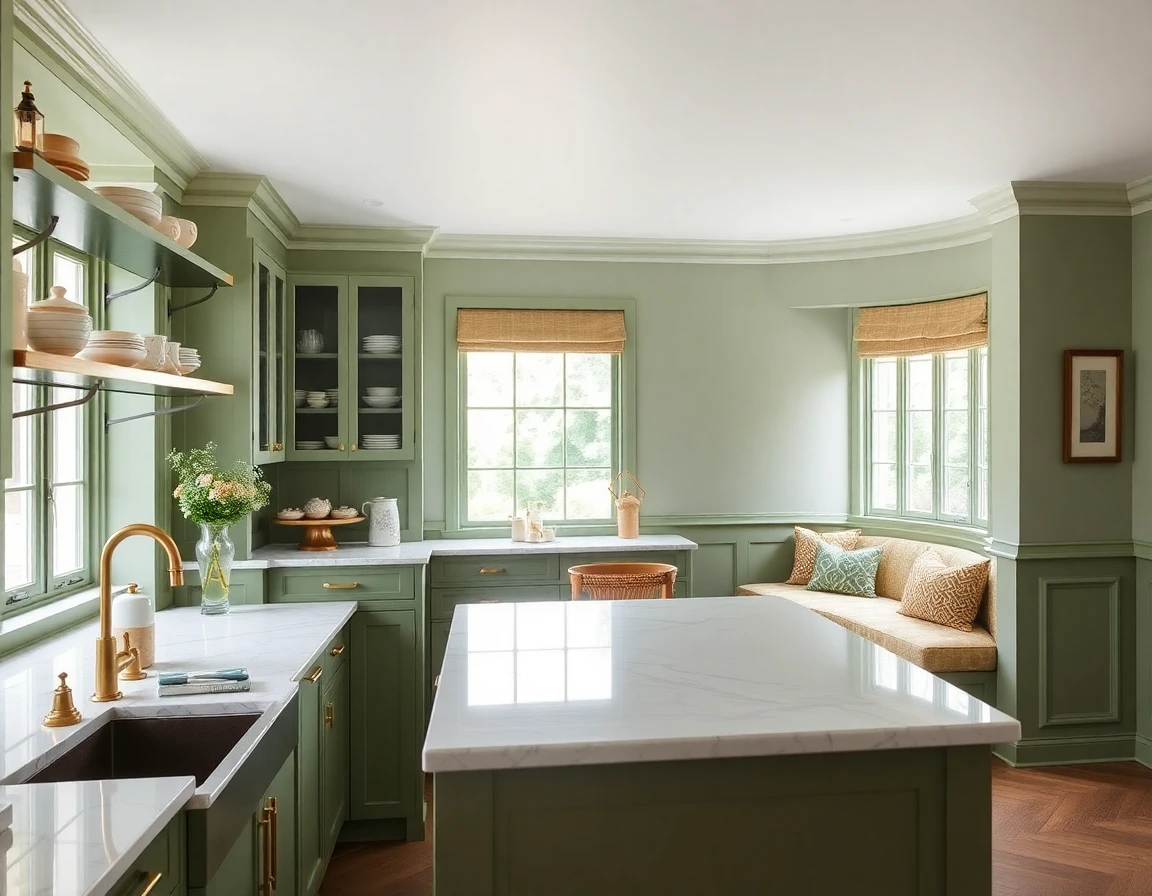
Willow Cottage.
A thatched-cottage renovation with low ceilings and three doors leading directly into the garden. We kept the ceilings low on purpose, painted the cabinets a soft sage, and built a breakfast nook around the back window that catches the morning sun in October.
Open shelving above the range for hand-thrown Cotswold pottery. Carrara marble below. Brass taps by Perrin & Rowe. Half the kitchen is outside, as it should be.